
At Lateral, we believe later life is an opportunity to focus on what keeps you feeling strong, connected and confident. Staying active is not about chasing personal bests. It is about building habits that support your health, independence and enjoyment of everyday life.
Guidance from the NHS recommends that older adults aim for regular physical activity each week, including strength and balance work alongside moderate aerobic exercise. These guidelines are designed to help people maintain mobility, reduce the risk of falls and support long-term health.
The World Health Organization also highlights that regular movement in later life is linked to improved heart health, better mental wellbeing and a lower risk of social isolation.
The benefits are not purely physical. Taking part in activities for over 60s can help improve mood, boost confidence and create valuable opportunities to meet new people. We know that staying active and staying connected is key in helping prevent dementia [read more here]. For many older adults, joining local classes, clubs or social groups becomes just as important for friendship and community as it is for exercise.
The good news is that there is a wide range of activities to suit different abilities and interests.
From low impact options such as swimming, yoga or walking football, to more adventurous challenges like hiking holidays or cycling tours, there are accessible ways to stay active at every stage of later life.
In this guide, we explore 50 activities for over 60s that support physical health, encourage social connection and offer something new to look forward to.
Golf.
Get started: https://getintogolf.co.uk/beginners-guide/
Golf is a classic British sport that many people love and it’s easy to see why it’s so appealing to over 60s.
For many older adults golf offers a wide range of benefits: coordination, social connection, and of course, fitness. It’s a great sport to be enjoyed with friends and family and is very low impact, allowing you to go at your own pace.
You don’t have to have golfing experience to enjoy the sport, in fact many people over 60 putt their first ball in golf!
Joining A Running Club.
Get started: https://www.englandathletics.org/take-part/find-a-club/
Joining a running club is a fantastic way to build strength, confidence and routine. Many running clubs in the UK offer groups for beginners, so again, no need to worry!
As one of the simplest and most effective forms of exercise, running is a great way to support long-term health and endurance.
Whether you want to train for a specific goal, such as Couch to 5K or take things at your own pace, running could be the perfect activity for you.
Running clubs are also a great way to meet new people, become part of a local community, and stay socially active.
Couch to 5K.
Get started: https://www.nhs.uk/live-well/exercise/couch-to-5k-week-by-week/
The NHS Couch to 5K programme is designed especially for people with no previous running experience.
It’s a fantastic way to gradually build your ability to run over nine weeks, eventually completing a 5K run.
As one of the most accessible activities for over 60s, Couch to 5k begins gently and increases gradually, helping you to stay active and find a comfortable rhythm.
Training For A Half Marathon.
Get started: https://www.runnersworld.com/uk/training/half-marathon/a760105/half-marathon-training-plan-for-beginners/
Training for a half marathon may sound ambitious, especially for those who haven’t tried running before. However, by following a clear plan, you’ll be surprised at what your body can accomplish, even after 60!
Many events welcome runners of all ages, and taking part can be a positive way to get involved in charity fundraising or local community events.
This type of challenge supports cardiovascular health, mental health, and is a great way to meet new people.
Training For A Marathon.
Get started: https://www.londonmarathonevents.co.uk/training
Marathon training requires commitment and steady progress over time, so it’s not for everyone. But, if you have the correct mindset, you could be running your own marathon this year.
For the best outcome, it’s very important to follow structured guidance and allow time for recovery.
Marathon running provides a great sense of accomplishment and is a powerful way to build strength, resilience and confidence.
You’ll also get the opportunity to meet like-minded people who may be training for a marathon for the first time too.
Trail Running.
Get started: https://www.salomon.com/en-gb/alpine/explore/how-to-start-trail-running
Trail running is another option if you’d like to try running as an activity after 60. This type of running combines outdoor adventure with a good cardiovascular workout.
By practising running on uneven surfaces, such as descents from hills, you can improve long-term balance and coordination.
However, it’s extremely important to choose suitable terrain to minimise the risk of falls and build up your confidence gradually.
You may also want to consider joining a running group for extra support and socialising.
Nordic Walking.
Get started: https://www.britishnordicwalking.org.uk/get-started
Nordic walking is an activity that takes part outdoors using poles to engage the upper body as well as the legs.
Research has shown that Nordic walking can increase energy expenditure compared to regular walking. It’s an enjoyable activity that is easy going on the joints and can be shared with friends.
During your walks, you’ll also get to take in the joys of your surroundings, making this activity a wonderful combination of sightseeing and cardiovascular exercise.
Long-Distance Hiking.
Get started: https://www.ramblers.org.uk/go-walking-hub/how-start-walking/
Long-distance hiking is a rewarding activity that gets you out into the fresh air while carrying out physical activity.
Walking is one of the most accessible activities for over 60s, and the NHS confirms that brisk walking counts as moderate intensity exercise.
You can start with shorter routes and gradually increase distance as your confidence and stamina grows. It’s also worth joining the Ramblers or a local walking community that can help you meet new people and stay motivated.
Cycling.
Get started: https://www.cyclinguk.org/beginners
Cycling is an excellent cardiovascular activity that is gentle on the joints, for this reason, many older adults enjoy this sport.
Cycling supports heart health and leg strength while remaining low impact and gets you outside into new scenery you may not have explored before.
Cycling UK offers guidance for beginners, making it easy for older adults to build confidence safely and access the sport.
There are also endless opportunities for group rides, where you can meet new friends and socialise.
E-Bike Touring.
Get started: https://www.cyclinguk.org/article/electric-bikes-beginners-guide
Electric bikes also known as E-bikes, provide pedal assistance, making longer rides more manageable.
This allows many older adults to enjoy cycling even if they are returning after a break or have never cycled before.
E-bike touring is a wonderful way to travel while staying active, offering a supportive form of exercise and making longer routes more accessible.
Indoor Rowing.
Get started: https://www.concept2.com/indoor-rowers/training/technique
If outdoor rowing sounds too ambitious, you may want to consider indoor rowing as an activity.
Indoor rowing machines provide a full body exercise session, helping to build cardiovascular fitness and muscular strength.
They’re great for structured and controlled activity, and you can train your full body by using one, even just for 30 minutes.
Many local gyms offer these machines, though you can buy your own for use at home, too.
Learn To Row On Water.
Get started: https://www.britishrowing.org/learn-to-row/
If rowing on water sounds appealing, you’ll be glad to know that the activity is a great fitness option, engaging many muscles in the body.
We recommend that you enquire with a local rowing club, where beginner programmes often run to support safe technique development.
You’ll get to meet new friends along the way and engage in teamwork as part of a supportive community.
Swimming For Fitness.
Get started: https://www.swimming.org/swimengland/swimming-for-fitness/
Swimming is one of the most recommended low impact activities for over 60s and there are many ways to enjoy a dip in the water.
Whether you like the idea of wild swimming, swimming at your local pool, or in the sea, it’s a great exercise that works the whole body while reducing stress on joints.
Swim England highlights that swimming supports heart health, flexibility and overall wellbeing. It’s a great, suitable sport for beginners and experienced swimmers alike.
Open Water Swimming.
Get started: https://www.outdoorswimmingsociety.com/category/survive/cold/
Open water swimming has grown in popularity in recent years as a type of activity combining outdoor exposure with steady physical activity.
Be aware that safety is crucial when it comes to open water swimming and you should always start gradually.
We advise you to join organised social groups and avoid open swimming on your own. In doing so, you’ll be able to immerse yourself in the activity with safety covered.
Kayaking.
Get started: https://uksa.org/kayaking-for-beginners/
Kayaking may be an activity you’ve never considered before. Many over 60s find that kayaking is an exhilarating sport that helps to build upper body strength and coordination.
It also provides time outdoors and connection with nature, which is important for mental health and wellbeing.
Beginner courses teach safe technique and water awareness which is the most important aspect of the activity. Once trained, you can enjoy the power of water and stay active at the same time!
Canoeing.
Get started: https://gopaddling.info/get-started/
Unlike Kayaking, canoeing is a steadier and more controlled water sport. It’s suitable for different ability levels and all ages, encouraging teamwork and communication.
Many local clubs provide instruction and equipment, making it easier for older people to get involved safely.
Stand-Up Paddleboarding.
Get started:https://gbsup.co.uk/blogs/advice/how-to-start-paddleboarding
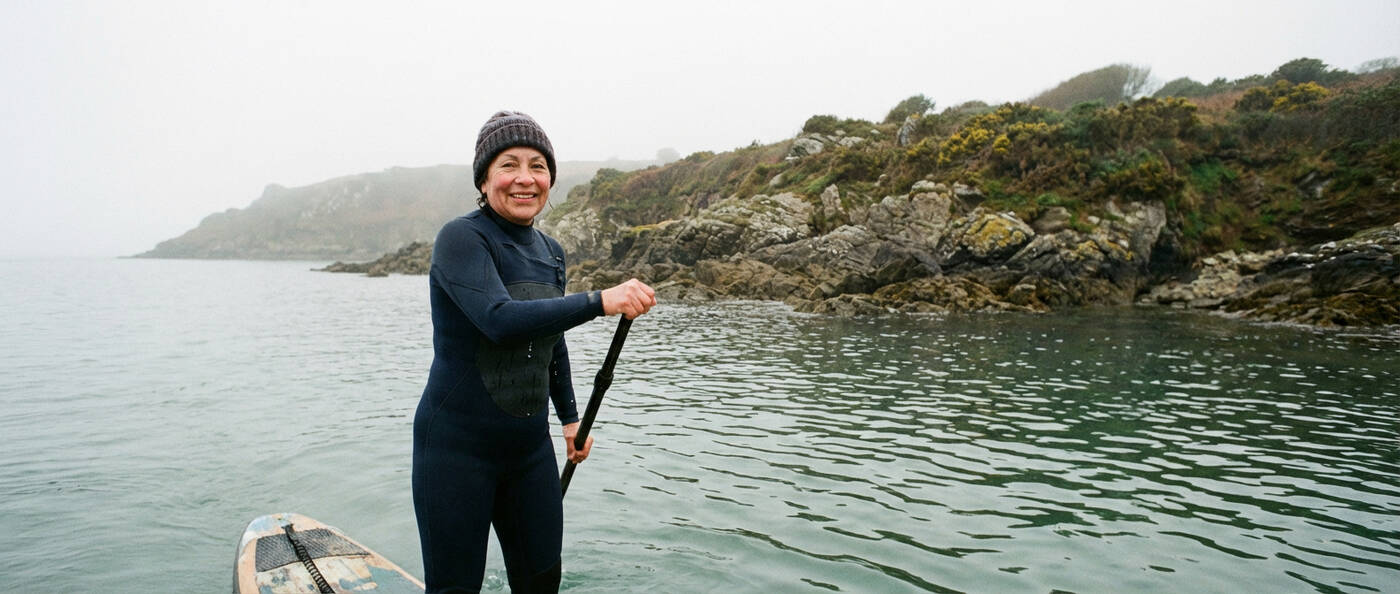
Stand-up paddleboarding challenges balance and core strength, both of which are valuable after 60.
The gentle but effective form of exercise is a really nice way to enjoy a sport at a relaxed pace, while taking in nature.
Lessons for beginners will help to build up your confidence, and paddleboarding can be a social activity too, making it great for meeting new people.
Sailing.
Get started: https://www.rya.org.uk/start-boating/sailing
Take to the waters by sailing and enjoy teamwork, planning and time outdoors. This less intense exercise focuses on skill development and coordination.
Engage with your local sail clubs to get a better idea of what the activity involves. You’ll be able to join structured training and social events, helping you meet new people while enjoying a new activity.
Coastal Walking Challenges.
Get started: https://www.nationaltrail.co.uk/en_GB/
One of the most wonderful activities for over 60s is without a doubt coastal walking. With a variety of stunning routes across the UK, it’s an opportunity for socialising, steady physical activity, swimming, and even birdwatching.
You can set personal goals and complete sections over time or take on challenges as you grow in confidence.
Walking groups provide support and a way to make friends while exploring the scenery along wonderful coastlines.
Orienteering.
Get started: https://www.britishorienteering.org.uk/get_started
Orienteering combines walking or running with navigation skills, keeping both the body and mind active.
If you’re over 60 and would like to try orienteering, be sure to look out for local events that cater for all levels, including beginners.
Indoor Rock Climbing.
Get started: https://www.thebmc.co.uk/how-to-start-indoor-climbing
Rock climbing isn’t as intense as it can sound, especially when it comes to indoor climbing.
This fun activity builds upper body strength and balance, and there are always opportunities to join beginner sessions and supervised instruction at climbing centres.
It’s a safe way to try something different and challenge yourself in later life, or overcome your fear of heights!
Via Ferrata Or Guided Climbing Experiences.
Get started: https://www.muchbetteradventures.com/magazine/what-is-via-ferrata/
Via ferrata routes use fixed cables and ladders to assist climbers without previous mountaineering experience.
When you try this activity, you’ll be guided gently by an expert, who will help you to focus on safety and skill development.
For confident older adults, this can be an exciting new activity that builds confidence over time and allows you to travel to new places.
Strength Training In The Gym.
Get started: https://www.nhs.uk/live-well/exercise/strength-and-flex-exercise-plan/
As one of the most accessible forms of exercise, gyms are a great place to explore at over 60.
The NHS recommends that older adults include muscle strengthening exercise at least twice a week for optimum results.
Strength training supports bone health, balance and independence. You’ll also be surprised at how much strength training can help with mental clarity too.
If you’d like to join a gym and try strength training, visit your local gym and sign-up for an introductory session.
Functional Fitness Classes.
Get started: https://www.crossfit.com/what-is-crossfit
Functional fitness focuses on movements used in everyday life to improve mobility and overall strength.
You’ll be guided through a session, where you’ll learn new exercises that you can carry out later at home. Modified sessions are often available, making this a supportive form of exercise for older people.
Circuit Training.
Get started: https://www.puregym.com/blog/circuit-training-for-beginners/
Circuit training alternates between different exercises and is a proven way to improve endurance and muscular fitness.
Beginner sessions are suitable for those returning to regular physical activity and for over 60s who haven’t circuit trained before.
As with all new activities, ensure that you sign-up for a beginner class before throwing yourself in.
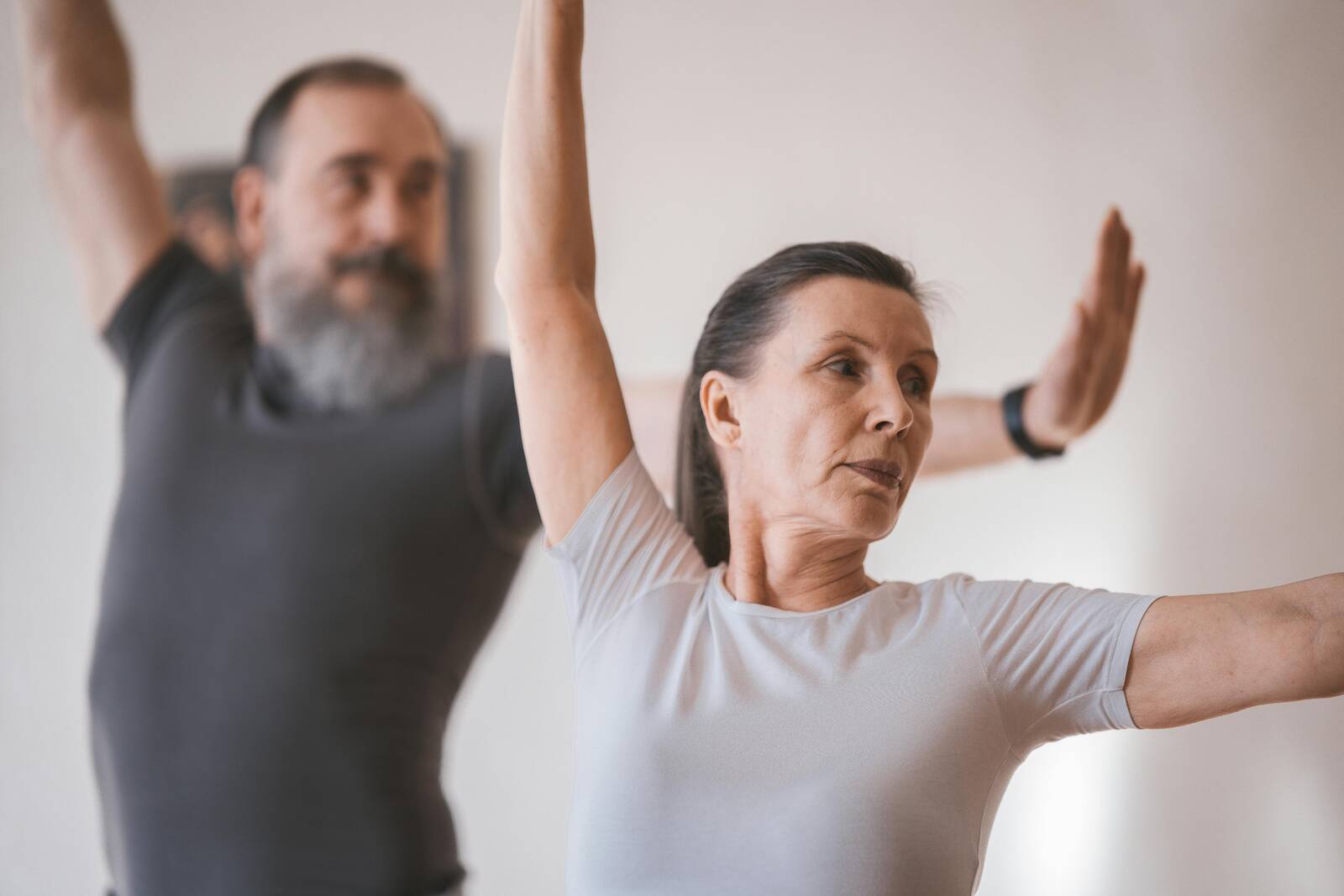
Yoga.
Get started: https://www.nhs.uk/live-well/exercise/guide-to-yoga/
Yoga is an ancient practice that improves flexibility, balance and relaxation. The NHS confirms yoga can help with strength and posture, two areas that are particularly important in later life.
We recommend that you look for yoga classes in your local area, where you can attend a taster session.
If you enjoy working through poses and this form of gentle exercise, you may find weekly classes to be beneficial. Yoga also attracts a lovely crowd, giving you the opportunity to meet new people.
Pilates.
Get started: https://www.nhs.uk/live-well/exercise/pilates-guide/
Pilates focuses on core strength and posture and is often considered a more intense version of yoga.
As with yoga, it’s suitable for beginners and supports balance and mobility, both of which are important for older adults.
Again, find a local pilates studio to try out a session and see if it’s for you before committing.
Tai Chi.
Get started: https://www.nhs.uk/live-well/exercise/guide-to-tai-chi/
Tai Chi is an ancient Chinese activity involving slow, controlled movements. Research suggests it can help improve balance and reduce falls risk.
This calm and low impact form of exercise is enjoyed by people of all ages, helping you to connect both the body and mind.
Walking Football.
Get started: https://thewfa.co.uk/what-is-walking-football/
Walking football is designed to be slower paced and inclusive, it may be a great alternative to regular football if it’s something you previously enjoyed.
It allows participants to enjoy team sport while keeping the intensity manageable and is a great way to make friends.
Tennis.
Get started: https://www.lta.org.uk/play/ways-to-play/get-started/
Tennis is a wonderful activity that supports coordination and cardiovascular exercise. You can enjoy the sport both indoors and outdoors, with local clubs often providing beginner sessions.
This activity is a bit more fast-paced, so you may need to build up your stamina, through walking for example, before a proper match with an opponent!
Padel Tennis.
Get started: https://www.lta.org.uk/play/ways-to-play/padel/
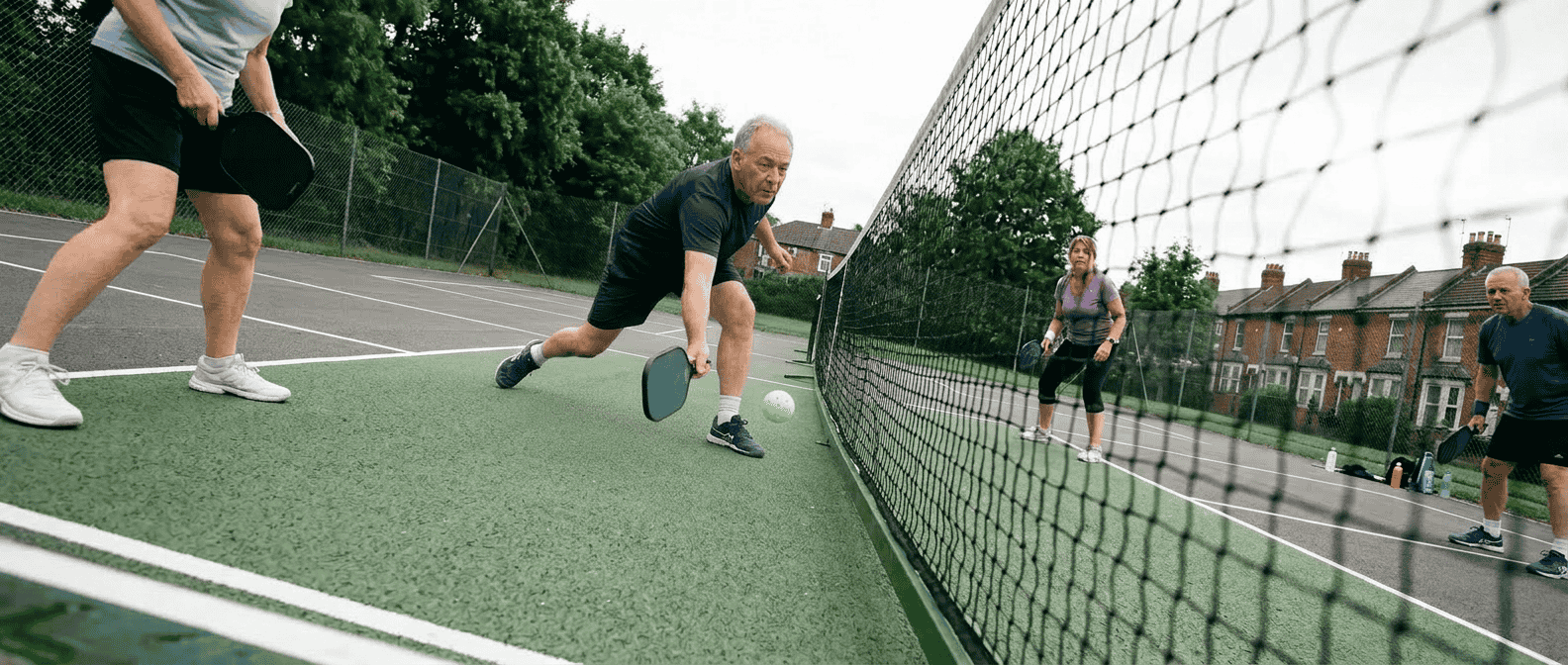
Padel is played on a smaller court, making it accessible for many players., including those over 60.
It encourages teamwork and steady physical activity while being a fun and sociable activity to enjoy with others.
If you’re new to padel, contact your local sports centre to try a beginner session. Padel could end up being your new favourite activity!
Table Tennis.
Get started: https://tabletennisengland.co.uk/play/get-started/
If regular tennis isn’t for you, table tennis could be.
Table tennis improves reflexes and coordination in addition to supporting cardiovascular health.
It’s a wonderful, social indoor activity that helps you stay mentally and physically active. Whether you bring a friend along to practise with or meet new friends at a club, we highly recommend trying table tennis.
Badminton.
Get started: https://www.badmintonengland.co.uk/on-court/get-started/
Like table tennis, badminton is a low-impact activity that provides aerobic exercise and agility work.
Many towns across the country offer local clubs for complete beginners as well as refresher sessions. This fun sport is another great way to meet new friends, get out of the house, and exercise steadily.
Bowls.
Get started: https://www.bowlsengland.com/get-involved/
Bowls is popular among older adults as it’s both strategic and low impact.
In the UK, you’ll find a range of bowling greens, with many towns having their own clubs, providing a real sense of community.
If you’d like to try a relaxing yet competitive activity that gets you out of the house into the fresh air, bowls may well be for you.
Golf Society Trips And Away Days.
Get started: https://www.englandgolf.org/get-into-golf/
If you do decide to try golf and find you enjoy it, there’s also the opportunity for golf trips, where travel, friends, and golfing are all combined.
These sorts of trips are very popular for over 60s as they encourage connection and enjoyment while ensuring you stay active at the same time.
Dance Fitness Classes.
Get started: https://www.zumba.com/en-GB/how-it-works
You may never have heard of dance fitness before, but it’s most likely exactly what you imagine!
Combining dance and exercise, dance fitness classes such as Zumba are a fun way to boost your mood and maintain regular exercise in group classes.
You’ll get to meet lots of new people and have a great time along the way.
Ballroom Or Latin Dancing.
Get started: https://www.idta.co.uk/start-dancing/
Perhaps you’ve enjoyed ballroom dancing in your past, or always wanted to try Latin dancing. This may be your time to revisit the activity or give it a go for the first time.
Dancing is a great way to improve coordination and balance in many ways. You’ll also naturally build your confidence and meet plenty of likeminded friends along the way.
Adventure Racing Or Obstacle Events.
Get started: https://toughmudder.co.uk/mudder-nation/how-to-train-for-a-tough-mudder/
Obstacle events can be adapted to different levels, so they suit a range of different ages, including over 60.
These types of events can be used to fundraise, offering the opportunity to build strength, teamwork and resilience at the same time.
Whether you’d like to try a one-off obstacle course or could see yourself doing it regularly, there really is no age limit!
Triathlon Training.
Get started: https://www.britishtriathlon.org/get-involved/beginners-guide
A triathlon combines swimming, cycling and running, providing a bit of everything for anyone who fancies competing.
Like a marathon, training for a triathlon can provide motivation, focus, and something to work towards achieving.
Structured training helps older people progress safely, so it’s key to find a trainer if you ‘d like to challenge yourself in later life!
Parkrun Participation.
Get started: https://www.parkrun.org.uk/
If you’ve never heard of Parkrun, it’s a simple concept bringing running enthusiasts together in a park to attend free weekly 5K events.
Parkruns are steadily growing in popularity as a welcoming, inclusive environment for all types of runners.
You can go at your own pace, be any age to join and will no doubt find yourself surrounded by a warm, supportive community.
Volunteering At Sporting Events.
Get started: https://www.runnersworld.com/uk/events/a775128/how-to-volunteer-at-a-race/
Volunteering keeps you involved in sport without competing, if you still want to get involved.
It’s a positive way to stay socially active, and support others along the way.
If you’re interested in volunteering at local sporting events, we recommend that you reach out and contact clubs directly for further information.
Hiking Holidays.
Get started: https://www.muchbetteradventures.com/magazine/how-to-prepare-for-a-hiking-trip/
Hiking holidays combine travel and regular walking usually in lovely, scenic locations.
Many older people find themselves enjoying hiking holidays in Europe, balancing exercise and walking with socialising and exploring the local culture.
Cycling Holidays.
Get started: https://www.cyclinguk.org/article/cycle-touring-beginners-guide
Cycling tours and holidays are a great way to focus on structured travel and daily physical activity.
They are suitable for different levels, including supported trips for beginners and over 60s. Many local cycling clubs will organise their own holidays, so joining a club is a great way to get involved.
Campervan Or Road-Trip Touring.
Get started: https://www.campervanlife.com/start-here
If you own a campervan,have you ever considered touring?
Campervan touring is an activity that encourages exploration and outdoor living, while offering the opportunity to socialise, meet new people, and enjoy coastal activities.
Many people choose to tour in their campervans and bring their bikes with them for a spot of cycling too. These types of tours are what you want to make of them, offering complete freedom of movement and choice!
Skiing Later In Life.
Get started: https://www.skiclub.co.uk/advice-and-inspiration/beginners-guide
If you’ve never tried skiing before, now may be the time.
Skiing can often seem like an intimidating activity, but with the right guidance and training, you can make gradual progress to take on slopes confidently.
We advise you to research local skiing lessons and find a provider that can guide you on the slopes gently.
Learning To Surf.
Get started: https://www.surfingengland.org/how-to-start-surfing/
Surfing is another activity that you may have been curious about for years but never tried.
This exciting sport helps to build balance and upper body strength whether indoors at a surfing club or outdoors in the sea.
It’s important to attend structured lessons to help you build skills safely, especially if you’re a complete beginner.
Scuba Diving.
Get started: https://www.padi.com/learn-to-dive
Scuba diving can be a fascinating activity, especially in the wild. However, it requires certification and training in order to be enjoyed safely.
Once you’re trained, it’s a wonderful way to explore underwater environments while staying mentally active.
Stand-Up Comedy Or Improvisation.
Get started: https://www.citylit.ac.uk/courses/stand-up-comedy
For something a bit different, how about trying comedy and improvisation classes?
This type of activity can rapidly build confidence and creativity, while connecting you to others.
Classes are always social and supportive, while offering entertainment and a great way to let your hair down.
Starting A Walking Or Activity Group With Friends.
Get started: https://www.resourcecentre.org.uk/information/starting-a-group/
Creating your own walking group is also an option if you find yourself enjoying hiking or Nordic walking.
By gathering together, you’ll strengthen the community, build routine, and make friends along the way.
Nothing should stop you from taking the lead after 60!
Training For A Charity Challenge.
Get started: https://www.globaladventurechallenges.com/how-to-prepare
Finally, but not least, a charity challenge may be the perfect introduction to a new activity. Whether you want to carry out a sponsored 5k run, train for a triathlon or get on your bike for a challenge, the options are endless. goals.
There’s something deeply motivating about combining fundraising, teamwork and meaningful physical activity.
More Information and Research.
NHS Physical Activity Guidelines for Older Adults
https://www.nhs.uk/live-well/exercise/physical-activity-guidelines-older-adults/
World Health Organization Physical Activity Fact Sheet
https://www.who.int/news-room/fact-sheets/detail/physical-activity
These resources provide evidence based guidance on recommended exercise levels, including aerobic and muscle strengthening activities for over 60s.
References
NHS: Physical activity guidelines for older adults.
World Health Organization: Physical activity fact sheet.
Swim England: Swimming for fitness guidance.
British Nordic Walking: Research summaries.
NHS Couch to 5K programme.
England Athletics club finder guidance.