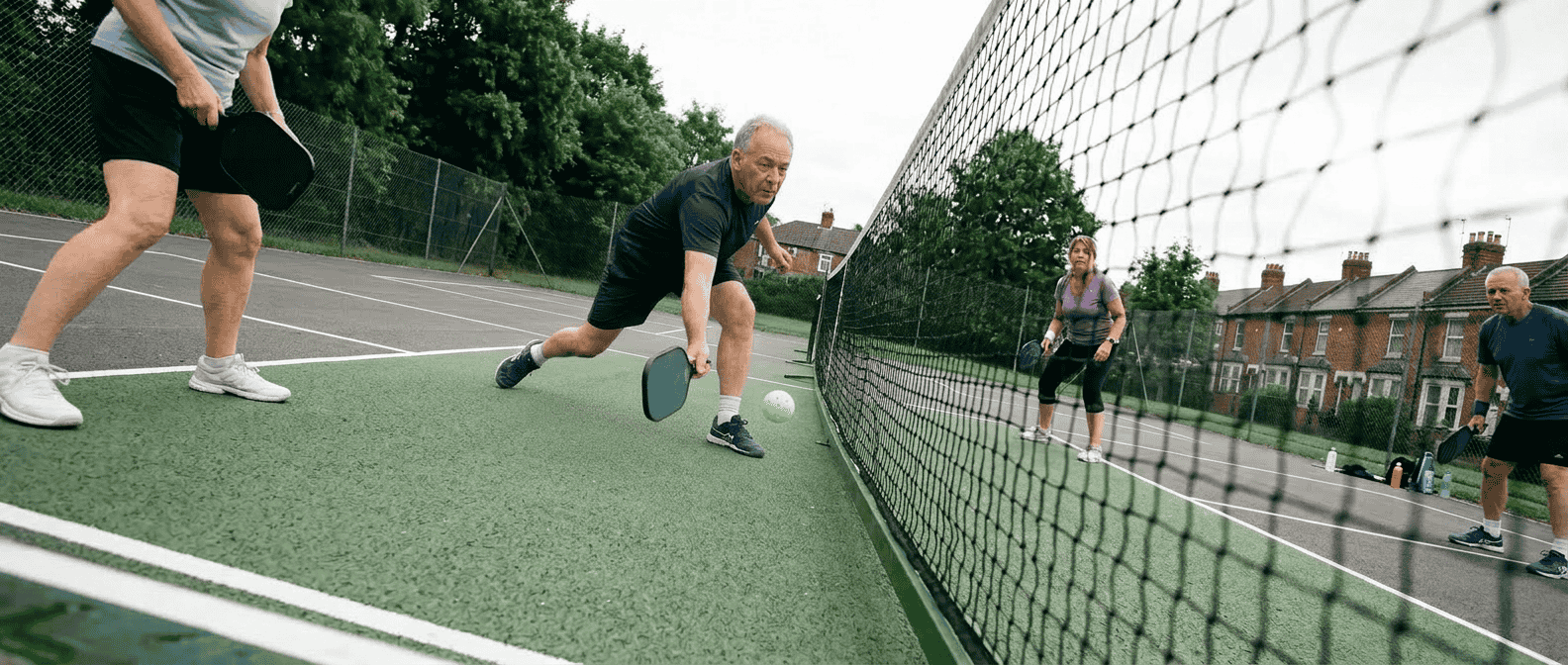

Pickleball is rising in popularity, not just for its quirky name. The low-impact sport is gentle on the joints and very easy to learn, making it ideal for those over the age of 60.
Perhaps you’ve already heard of pickleball, or this may be the first time you’re reading about it. Either way, we want you to stick with us as we explain what it’s all about and how you can benefit from playing pickleball in this guide.
One of the best things about the sport is that you can play indoors or outdoors. Games take place on a small court adapted from a tennis or badminton space.
It’s a great way to keep fit and active while meeting new people. If you’re searching for a social sport to start after 60, pickleball is a top contender!
Whether you want to improve your balance, coordination, or overall fitness, or simply enjoy spending time with others, pickleball is worth trying.
What is Pickleball?
Pickleball is a racket sport that blends multiple elements of tennis, badminton, and table tennis.
The pickleball court is about one-third of the size of a traditional tennis court, making it easier to cover. You can play singles or doubles, which means one-on-one matches or two teams of two.
The game uses a lightweight paddle and a perforated plastic ball, similar to a wiffle ball. It can be played by just two players or in doubles teams.
The rules are simple to follow and beginners often pick it up quickly. You can also adjust the pace of the game depending on your skill or comfort level. Over time, you’ll likely find that you want to move on from gently playing to a more competitive game. Remember to just go at your own pace!
One of the reasons that pickleball has become so popular with older adults is that the court is smaller. A smaller court means less running for everyone involved, which reduces strain on your joints and makes the game highly accessible.
Even older people with limited mobility can enjoy playing; many pickleball players say they feel far more confident after just a few sessions.
Is Pickleball a Good Game for Seniors?
Yes, absolutely!
Pickleball is an excellent choice for older adults as it offers a combination of exercise, skill, and social interaction, all three boxes ticked in one simple game.
Because it’s low impact, pickleball is a sport that’s easy on the knees, hips, and joints when compared to other exercises such as running.
With this said, it still provides enough movement to help maintain fitness and improve balance.
The great thing about pickleball is that you won't need previous experience with racket sports to start. Many clubs offer sessions specifically for seniors, and these classes are tailored to beginners.
Pickleball allows you to adjust the game to your comfort, so that you’re in control of your workout. You can move slowly, take frequent breaks, and focus on short rallies while still getting a good workout.
The Benefits of Pickleball for Over 60s
Pickleball is more than just an hour of fun on the court — its low impact nature means it suits a wide range of people, and it offers a wide range of physical and mental benefits. Thanks to this low impact exercise, it is especially well suited to those over 60.
Whether you’re looking to stay active, improve fitness, balance, strength, or social interaction, here’s what you can expect from playing pickleball regularly.
Improves Cardiovascular Health
Playing pickleball is a form of moderate aerobic exercise as you move around the court, serving, and returning shots, raising your heart rate as you do.
This helps improve circulation, strengthens the heart, and increases stamina over time. By playing pickleball often, you’ll notice that everyday activities in and outside of your home may become easier.
For older adults, improving cardiovascular health is very important as a stronger heart supports energy and helps to reduce the risk of heart disease and support overall wellbeing. All you need to get going is a basic pickleball set, available from most sports retailers.
Increases Balance and Coordination
Pickleball challenges your body in a safe, controlled way. Learning to hit the ball accurately while moving builds quick reflexes, and the combination of tracking, stepping, and changing direction will certainly help to improve your balance over time.
Hand-eye coordination also benefits from practicing accurate shots, which is a great skill to strengthen at any age.
Better balance reduces the risk of falls and improved coordination makes everyday movements, such as reaching or bending, feel easier and safer.
Many older adults end up feeling more confident on their feet after playing pickleball.
Joint-Friendly Exercise
One of the greatest advantages of pickleball for older adults is that it’s super low impact. Unlike running or high-intensity sports, pickleball allows you to move, pivot, and reach without placing excessive strain on joints.
For people living with arthritis or joint discomfort, pickleball is a fantastic form of exercise that still provides a cardiovascular workout and strengthens muscles.
Increased Joint Mobility
Pickleball involves stepping, twisting, and reaching, which keeps joints moving through a natural range of motion.
Regular play can help maintain or improve flexibility in the shoulders, hips, knees, and ankles. Again, this will make daily movements easier and help to reduce strain on muscles.
Even gentle movement on the court can make bending to pick up items, reaching overhead, or stepping over obstacles in the home feel smoother.
Stronger Upper Body and Grip
Using the paddle requires gentle strength from the hands, wrists, arms, and shoulders. Over time, this improves grip strength and tones muscles.
Stronger upper body muscles are beneficial for everyday tasks, such as carrying shopping bags, opening jars, or lifting light objects.
Nurtures Social Connection
Pickleball is often played in doubles, which encourages communication and teamwork. Regular sessions provide opportunities to meet people and build friendships along the way.
Many older adults find the social side of pickleball as rewarding as the physical exercise!
Being part of a group or club can also provide motivation to keep playing. Social connection is linked to improved mental health, reduced stress, and a greater sense of purpose.
Refines Mental Sharpness
Pickleball is a thinking game as well as a physical one, so don’t be fooled.
Anticipating where the ball will go, planning your next move, and keeping track of scores all require strategic thinking and help exercise the brain. These mental challenges deliver real cognitive benefits and may support cognitive function and improve focus.
Many seniors enjoy the combination of mental and physical activity as they find it keeps them alert while still having fun.
Helps Reduce Stress
Playing pickleball can be relaxing for many people as physical activity releases endorphins, which boost overall mood.
Socialising with others as you play will also help with this, and many players find that they feel a lovely combination of relaxation and energy after a game of pickleball.
Supports Weight Management and Muscle Toning
While pickleball is lower intensity than running, a session on the court still burns calories. Regular play helps maintain a healthy weight and tones muscles throughout the body, including legs, core, and arms.
Over time, muscle strengthens and your endurance increases. You may find that you want to move onto more competitive games eventually, which is a natural progression when the timing is right.
Accessible, Affordable, and Easy to Learn
Another positive about pickleball is that it doesn’t require expensive equipment. Most local councils have tennis or badminton courts that can be used free of charge or for a very low fee.
If you’re a beginner, you’ll likely pick up the sport quickly as the rules are simple and easy to remember. So, don’t feel too imitated the first time you step foot on the court!
Suitable for All Fitness Levels
Pickleball can be adapted for any fitness level, making it extremely accessible for those over 60.
Beginners can play at a slower pace while more experienced players can move faster and play competitively. This flexibility makes pickleball ideal for older adults seeking enjoyable, achievable physical activity.
The Rules
The rules of pickleball are simple to follow. We’ve listed what you can expect in terms of rules below:
- Serve underhand and diagonally
- The ball must bounce once on each side after the serve
- Volleying is allowed after the ball has bounced
- Points can only be scored by the serving team
- The first to 11 points wins, but you must win by two points
Many clubs offer beginner sessions that teach the rules in a single session or two, this will help you to feel confident and enjoy the game from the get-go.
How to Play Pickleball
Warm Up Before Playing
No matter the sport you’re playing, always start with gentle stretches. Focus on legs, arms, and shoulders and warm-up properly. By warming up, you’ll be reducing risk of injury and will be properly preparing your body for movement during the game.
Use an Underhand Serve
Begin with an underhand serve as this is far easier on the shoulders and back. It’s the standard for all beginners and you’ll be able to experiment with different types of shots as time goes on.
Aim for Controlled, Short Shots
Accuracy is more important than power in all racket sports. You should aim to keep shots short and controlled at all times to keep the game manageable and safe for yourself and others.
Stay Out of the Non-Volley Zone Unless the Ball Bounces
Avoid stepping into the ‘kitchen’ area unless the ball has bounced. This rule prevents injury and encourages strategic play.
Take Regular Breaks
Rest is key between games or sets to help prevent fatigue and allow your body to recover.
Hydrate Frequently
Even low-intensity exercise can dehydrate you, so be sure to drink water before, during, and after play. Keep a water bottle handy at all times!
Stop if You Feel Pain or Dizziness
Listen to your body and immediately stop playing if you feel discomfort, pain, or dizziness. Safety always comes first when reviewing game rules.
Pickleball Equipment
Another perk of pickleball is that you won’t need to kit yourself out with expensive equipment to get started. In fact, all you need is:
- A paddle
- A plastic ball with holes
- Comfortable shoes with grip
- Lightweight clothing
A good optional: wrist supports or knee braces can be especially helpful for those over 60.
Pickleball Tips for Over 60s
Now that you have the key information to get started with your venture into pickleball, here are some final tips:
- Start slow and focus on technique
- Play shorter matches at first
- Stretch before and after each session
- Focus on accuracy, not power
- Communicate with your doubles partner
- Adjust your pace to how you feel each day
Mistakes to Avoid
- Playing too fast too soon
- Skipping warm-up or stretching
- Forgetting to rest and hydrate
- Overreaching or lunging aggressively
- Ignoring the non-volley zone rules
Getting Lessons
Many clubs offer lessons for seniors and they’re certainly worth attending. Even if you just go to one lesson, you’ll find it very useful to learn about paddle handling, footwork, serving, and doubles strategy.
Lessons will also boost your confidence and reduce early frustration. Regular participation is the key — you can learn at your own pace and gradually increase intensity so that you don’t lose motivation to play.
FAQs
Is Pickleball Safe to Start After 60?
Yes, pickleball is a low impact sport that’s gentle on joints. Start slowly and follow safety advice at all times when starting any new sport after 60.
What Equipment Do I Need to Play Pickleball After 60?
A paddle, a plastic ball, comfortable shoes, and light clothing are enough to get started. Better still, grab a set and invite friends along — it’s always more fun with others!
How Long Should Beginners Over 60 Play at First?
Start with 20–30 minutes to begin with and then gradually increase time and intensity.
What Are the Most Common Injuries in Pickleball for Older Players?
The most common types of injuries that occur during pickleball include minor wrist, shoulder, or knee strains. However, most injuries can be prevented by following game rules and proper health and safety.
Can Pickleball Improve Fitness and Balance After 60?
Yes, playing pickleball improves cardiovascular health, coordination, balance, and muscle strength over time.
More Information and Research