

You might have heard that your bones get weaker as you age- but they aren’t the only thing that is quietly changing in ways that matter. Age-related loss of muscle is one of the most important and overlooked biological shifts in later life. This isn’t just about losing your six-pack, it is strongly linked to falls, fractures, disability and earlier death.
What is surprising is how early and steadily this decline happens. From midlife onwards, skeletal muscle mass falls on average by 0.5–1% per year, and muscle strength, which is even more important, drops by 1–3% per year. The slope steepens sharply after age 70. Over decades, this can mean a loss of up to half your muscle mass in your late 70s or 80s unless this decline is actively targeted.
Sarcopenia is a term used by doctors to describe muscle decline that is associated with low strength and low muscle quantity and quality. Crucially, it’s not just about the loss of muscle mass, the changes in muscle composition are also important- e.g. ‘marbling’, or fat infiltration into muscle, lowers muscle quality. This is why tests of muscle function are more important than trying to measure muscle mass. Although sarcopenia represents the extreme of age-related muscle loss, it is surprisingly common even in independent older people.
None of this is an inevitable decline. As with bone health, the important thing is to recognise the risk, identify it early and take action to prevent or reverse it.
Why does muscle loss happen as we age?
Most people assume muscle loss in ageing is simply “wear and tear.” In reality, the biology is far more interesting. Researchers have identified several mechanisms that explain why older adults lose muscle faster than younger adults, and why rebuilding it becomes harder with time.
One of the best-supported explanations is something called anabolic resistance. In younger adults, muscles react strongly to protein, amino acids, insulin and exercise. They switch on protein synthesis and rebuild tissue quickly. But with age, this response becomes muted. The same meal or workout gives a much smaller growth signal. This means that older adults need to give their muscle a stronger stimulus (such as more protein, higher training effort) to get the same anabolic signal.
There are other mechanisms proposed, including weaker nerve signals to muscles and reduced muscle mitochondrial function.
But perhaps the most underestimated cause of muscle loss is not using the muscle enough even for short periods. We tend to think of inactivity as harmless, but it can have significant and lasting effects on our muscle mass over time. We know that even in young people, just only a 5-day period of limb immobilisation in a cast can cause 10% loss of strength in that limb and in older people, supplementing dietary protein did not reduce the amount of muscle loss with limb casting suggesting that protein alone without resistance exercise is not sufficient to protect muscle.
Older people are more likely to have hospital stays, or periods of illness or injury that render them inactive. Each short episode can reduce movement for days or weeks, and cost several percent of muscle mass and unless this is actively built back up, losses can cumulate over multiple episodes.
Why should we care?
Age-related muscle loss is easy to dismiss as a cosmetic issue but the research paints a very different picture. Muscle is one of the strongest predictors of how well you will live in older age, and how long you will live. Here’s what the evidence shows.
1. Function, independence and frailty
Sarcopenia is described as one of the most important causes of functional decline and loss of independence in older adults. Low muscle strength is strongly associated with falls, disability and loss of independence. Longitudinal cohorts show that low muscle mass, and especially low muscle strength, predict higher risks of mobility limitations and poorer health-related quality of life.
It’s not just about looking good, your strength in later life is one of the strongest determinants of whether you can continue doing the things you love.
2. Falls and fractures
We often talk about bone density when discussing fractures, but muscle function is also an important risk factor. There is good evidence that links poor muscle function to falls and fractures in older adults. A 10-year Australian cohort showed that those in the lowest 20% for muscle strength and quality had significantly higher risks of falls, fractures and all-cause mortality; and muscle function out-performed muscle mass as a predictor. This means the strength of the muscle matters more than its size alone. A fall in later life is not a minor event. It is one of the leading causes of hospitalisation, loss of independence, and long-term care admission. Stronger muscles are an important modifiable factor that reliably reduces that risk.
3. Metabolic health
A surprising outcome from low muscle mass is the impact on metabolic health. Skeletal muscle is the main place that the body stores glucose when insulin is released. Skeletal muscle insulin resistance can be an early marker of Type 2 Diabetes. Reduced muscle mass helps drive insulin resistance and poor glycaemic control because there is simply less tissue to take up glucose. This is the hidden metabolic side of sarcopenia: lower muscle mass increases the risk of diabetes and its complications, even if your BMI is normal.
4. Survival
Your muscle mass can be predictive of your longevity. Multiple studies have shown that higher muscle mass was associated with lower all-cause mortality, even after adjusting for fat mass and other factors, suggesting that muscle is independently protective. By contrast, sarcopenia is associated with higher mortality rates . Muscle is biologically active tissue that supports immunity, metabolism, physical stability, and the body’s ability to withstand illness. Losing it removes a key buffer against the stresses of ageing.
What actually works to prevent or slow muscle loss?
1. Progressive resistance training
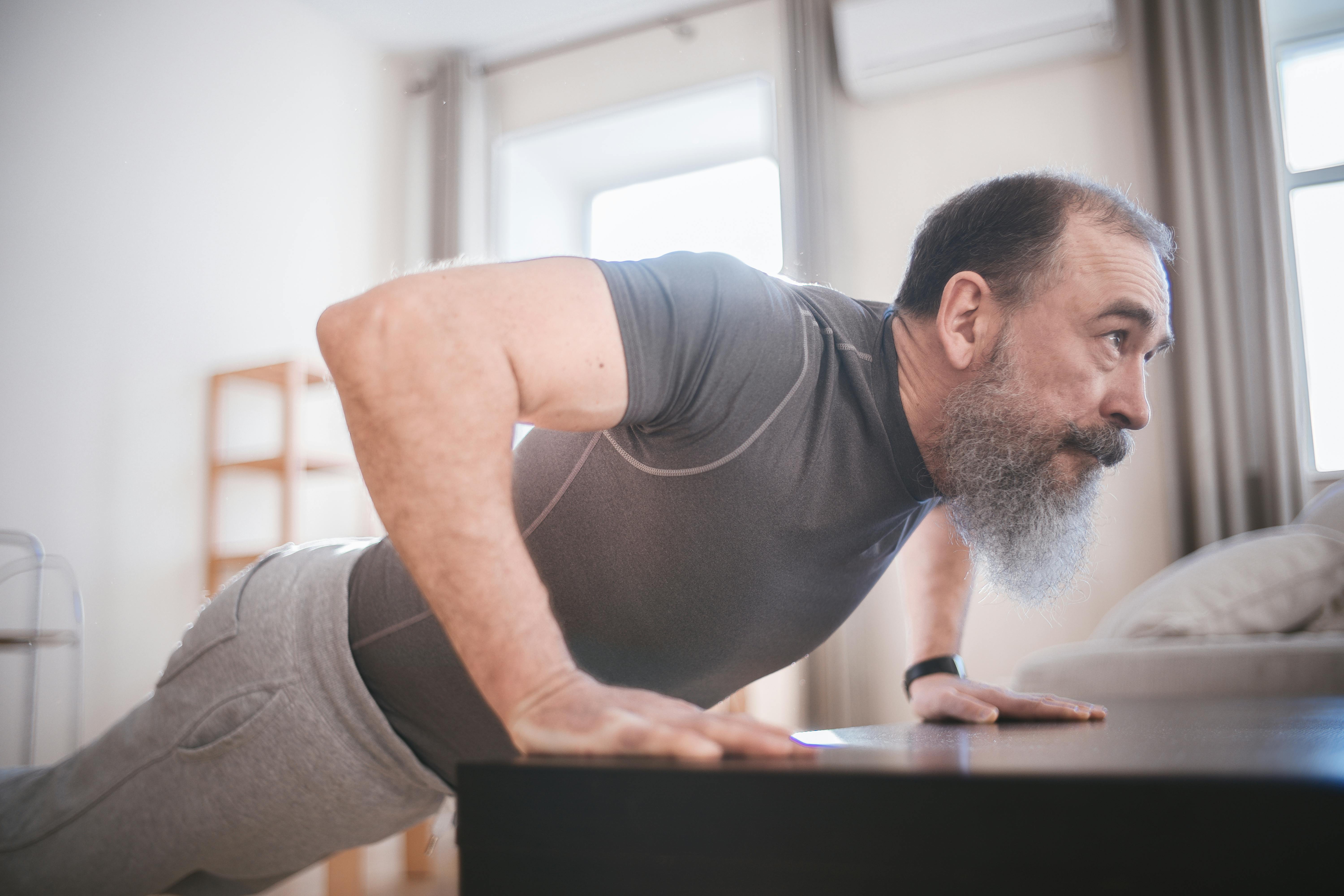
The most robust evidence is for progressive resistance training (PRT). PRT involves exercising muscles against some type of resistance that is progressively increased as strength improves. This usually means two to three times a week at moderate to high intensity by using weight machines, free weights, or elastic bands.
A high-quality review of 121 trials concluded that PRT substantially improves muscle strength and modestly improves physical function in older adults. Specific studies looking at PRT in older adults showed that even at advanced ages, PRT is an effective way of building muscle. Older adults participating in PRT showed a 29% increase in strength for leg press, 24% for chest press, 33% for knee extension, and 25% for lat pull. Crucially, gains are seen even in very old adults and in frail populations, provided intensity is gradually progressed and supervised appropriately.
Importantly, aerobic exercise (running, cycling) does not appear to have the same effect in increasing muscle mass. The exception is High-Intensity Interval Training (HIIT training), which may show a modest increase in muscle mass, but at a far lower rate than PRT. Aerobic exercise is still important for maintaining endurance, mitochondrial function and metabolic health, amongst a number of other benefits but staying active will not alone be sufficient to prevent age-related muscle loss.
2. Protein intake
Several expert groups argue that the standard adult protein dietary recommendations (0.8 g/kg/day) are insufficient to support muscle maintenance in most older adults, recommending 1.0–1.2 g/kg/day for adults >65 years in good health, and 1.2–1.5 g/kg/day for those with acute or chronic illness (with the main exception being for those with advanced kidney disease, who need to moderate their protein intake).
The healthiest protein sources include fish, eggs, dairy (such as yoghurt and milk), lean poultry, and soy-based foods such as tofu. Regularly including these across meals rather than all in one meal, while limiting reliance on highly processed meats, provides protein alongside key micronutrients and is associated with better muscle and cardiometabolic health in later life.
3. Creatine supplementation
Creatine is a compound of amino acids popular with athletes, and is one of the few supplements with a sizeable body of trial data: A meta-analysis of these trials in older adults combining creatine with resistance training found greater gains in lean tissue mass and strength (e.g. leg press, chest press) compared with training plus placebo . The majority of these trials were fairly small and short, and elsewhere highly conflicting evidence has fuelled plenty of debate about whether creatine is a genuinely helpful supplement or a waste of money. Nevertheless, creatine is safe for most adults and well tolerated, so anyone looking to optimise their gains in the gym could consider it. The key is to pair creatine with PRT as based on the evidence we have, taking the supplement alone is unlikely to lead to the desired muscle gain. Caution should be used for people with kidney disease who want to take creatine.
Key takeaways
If you want to stay independent, avoid preventable disability, reduce your risk of fractures and falls, maintain metabolic health, and improve your chances of healthy longevity, building and maintaining muscle is crucial. Age is not a barrier. Muscle responds to training in people in their 60s, 70s, 80s and beyond, but it requires the right inputs. The three most evidence-backed interventions are:
- Progressive resistance training - challenging your muscles 2–3 times a week with weights, resistance bands, bodyweight exercises or machines. Supplementing with creatine might help with building muscle if paired with a training regime, although the evidence still isn’t conclusive on this.
- Adequate daily protein - generally ≥1.0 g/kg/day for most older adults without advanced kidney disease.
- Minimising disuse - reducing downtime during illness or hospitalisation, and rebuilding lost muscle as soon as possible.
At Lateral we understand the importance of keeping fit and strong, which is why all members can access physiotherapy and nutritionist support to help advise how to navigate muscle health as you get older. Ageing well is not just about adding years to life, it’s about adding capability to those years and muscle is a key part of this. Strength is not merely a fitness metric; it’s a marker of resilience, autonomy and healthspan. Muscle is one of the organs that makes healthy ageing possible, and it is never too late to start protecting it.