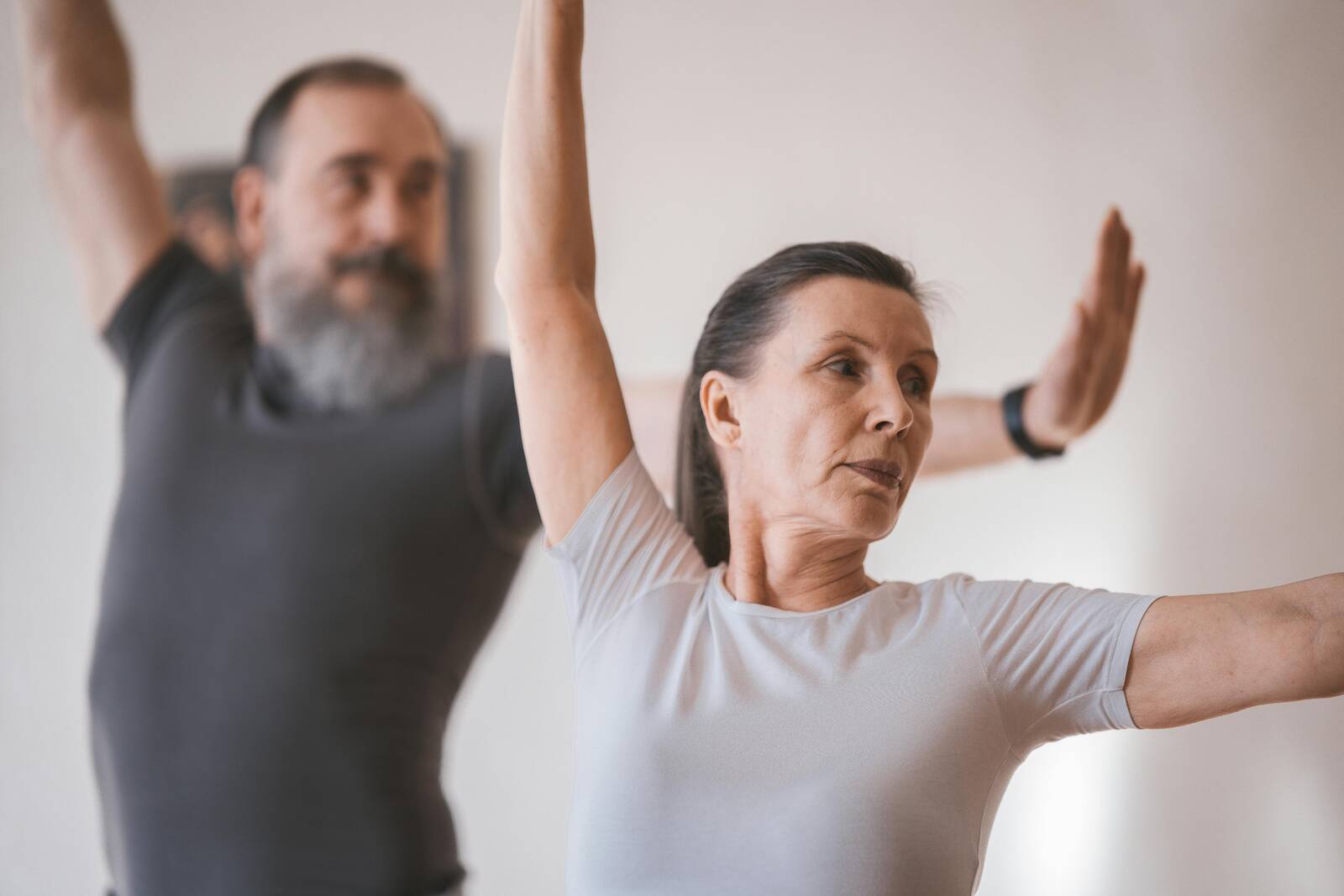

Getting started with Pilates after 60 can feel intimidating, especially if you’re worried about stiffness, balance, or injury.
But the beauty of Pilates is that it meets you where you are. It can be a series of low-impact, adaptable movements that improve strength, mobility and posture without punishing your body. In this guide, we’ll break down the essentials you need to feel confident and safe in your practice, whether you’re completely new to exercise or returning after a long break.
What is Pilates?
Pilates is a form of exercise pioneered by Joseph Pilates in the early 1900s. It focuses on a series of exercises designed to train the entire body, utilising a combination of deliberate, controlled movements.
The method includes exercises for various fitness elements, including flexibility, balance, posture, and core strength. Pilates for beginners over 60 can be simplified to a very basic level, making it suitable for anyone, regardless of fitness level.
Understanding The Benefits Of Pilates
Pilates is a perfect exercise approach for seniors because it builds strength, flexibility and body control in a low-impact way.
The techniques are relatively easy to learn, the equipment requirements are minimal, and the benefits are profound. Research shows that Pilates can help sufferers of lower back pain, meaning it takes on a therapeutic role as well as a fitness one.
How Pilates Supports Flexibility, Strength and Balance
Fundamentally, Pilates helps people to gain control over their bodies. The method makes you aware of how your feet, knees, spine, torso, limbs and head feel, move and govern your movement.
Once you strengthen your muscles, you are afforded more control over your movement, and you’re more injury-resistant.
Comparing Pilates With Other Low-Impact Exercises
A Pilates workout isn’t the only low-impact exercise approach, but it’s certainly one of the most complete. It’s also one of the most beginner-friendly, combining techniques that are easy to learn and require very little equipment.
A Pilates workout builds capacity in strength, flexibility and breathing control. It improves core strength and posture. It can be done easily at home - all you need to get started is a mat and a level floor.
Getting Started Safely
The best way to start is with a suitably qualified teacher or coach. Look online, and don’t be afraid to ask for proof of qualifications before enrolling in a class or course.
Explain to your teacher that you’re a beginner, and they’ll tailor the session to your ability.
Once you’ve learned the techniques and you’ve built some confidence, you can continue your practice with the guidance of a YouTube video.
Health Considerations and Medical Clearance
Pilates for seniors isn’t inherently risky, but it’s still worth having medical clearance from your doctor. If you’ve suffered from medical issues in the past, this takes on a new importance.
As with any new activity, just be sensible. Listen to your body.
Setting Realistic Goals and Expectations
Before embarking on any health and fitness journey, understanding your goals is an important step. The reality is, these goals will change and adapt as your fitness improves, but having a target to aim for is an excellent motivational tool.
In the beginning, a good goal might be to attend a class or perform a Pilates workout 3 times per week.
Preparing Your Home or Studio Space
Pilates for over 60s can easily be performed at home. All you need is a clear, flat area with enough space to work in.
If you are going to be guided by YouTube or any other video stream, you’ll need a safe, stable place to position your device. Make sure it’s flat and easily visible to you.
Consider lighting - you don’t want to be positioned under a bright light in the ceiling, so ideally you want a room that has plenty of natural light, or a light that doesn’t sit right in your eye line when you’re trying to do your Pilates workout.
Choosing the Right Equipment
Thankfully, the equipment requirements are basic. All you need are a handful of relatively inexpensive items. Here’s a list, with guidance on what to look for with each…
Mats and Props
The important thing here is the thickness and non-slip elements.
You’ll spend a significant amount of time sitting and lying in postures, so the mat must be thick enough to offer comfort and support. If you’re lying down, it should be comfortable enough so you don't hurt your spine on the floor.
When you’re standing in bare feet, it needs to be sufficiently grippy. During your Pilates workout, you could sweat, so you need to reduce the risk of slipping.
Resistance Bands and Stability Balls
For Pilates workouts, you need resistance bands with good-quality handles. Comfort and grip are key for the upper body exercises.
Looped bands (without handles) need to be thick, strong and made of high quality rubber allowing them to stretch properly. You don’t want to risk a band snapping mid-workout, so be willing to spend the extra money required.
Stability balls come in a variety of sizes to match the workout and the individual. Most are around 45cm (17.7 inches), 55cm (21.7 inches) or 65cm (25.6 inches). It’s a good idea to buy a ball with textured rubber for the non-slip properties and anti-burst technology.
Chairs and Walls for Support
One of the benefits of Pilates for those over 60 is that the movements can be modified, so even if you struggle with balance or mobility, you can still do a Pilates workout.
It’s empowering to know that regardless of your age or fitness level, you can adapt Pilates to suit your abilities, build your health and fitness through appropriate movement.
Modifying Exercises With Everyday Furniture
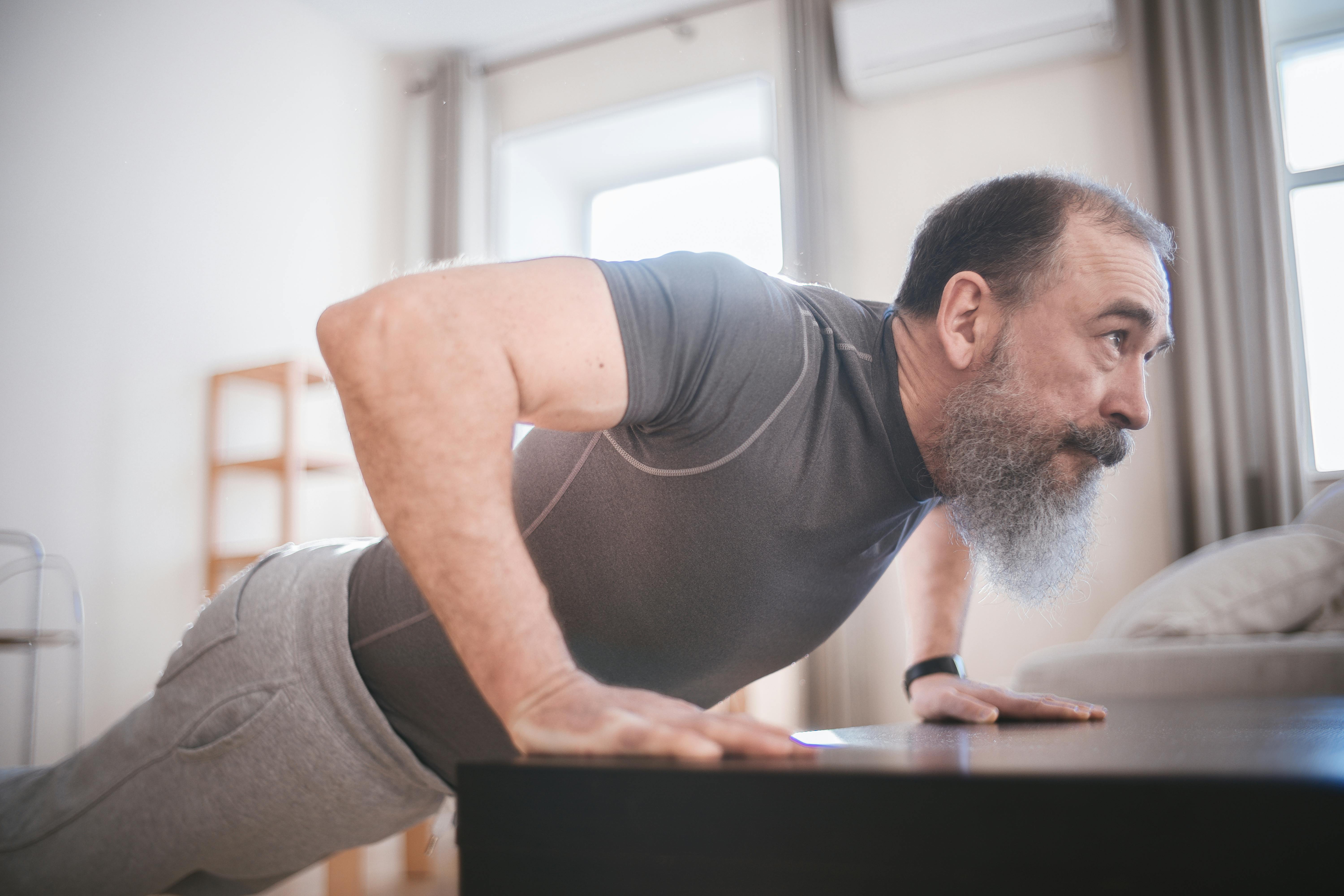
Many Pilates exercises can be adapted to use furniture for support. Just make sure that the furniture you use is strong, stable and won’t be pushed over.
Good examples include strong chairs, tables and sofas.
Learning Proper Breathing Techniques
Learning breathing techniques is one of the most important elements of Pilates, especially for over 60s.
Focussing on gentle, controlled breathing helps you move with more ease, improves posture, and supports your core without strain. By focusing on slow inhales through the nose and steady exhales, you’ll feel more relaxed, more balanced, and more in control of each movement.
Diaphragmatic Breathing
This encourages you to breathe deeply using your diaphragm, rather than shallow breaths into your chest. It’s sometimes referred to as ‘belly breathing’ or ‘breathing into your belly’. It helps improve oxygen delivery, reduce tension, and gently activate the core muscles that support the spine.
Practising this type of breathing can improve relaxation, posture, and movement control, making exercises feel smoother, safer, and more comfortable.
Coordinating Breath With Movement
Coordinating breath with movement helps make Pilates feel more natural and controlled. By exhaling during effort and inhaling during easier phases, you can move with better balance, stability, and confidence.
For beginners, this approach reduces unnecessary strain, supports joint comfort, and improves overall body awareness, making each exercise more effective and enjoyable.
Breathing Adjustments for Beginners
As we age, natural breathing can become shallower. In Pilates, we bring our breathing into focus with diaphragmatic breathing: inhaling slowly through your nose, allowing your lower ribs and belly to gently expand; then exhaling fully through your mouth, drawing your navel softly toward your spine.
Keep breaths smooth, relaxed, and unforced. Never hold your breath. This supports core engagement and reduces tension.
Core Exercises for Beginners
These floor exercises gently strengthen your deep abdominal muscles, supporting posture and daily movements. Performed lying down with controlled breathing, they build stability without strain, making them a perfect introduction to Pilates.
Gentle Mat-Based Core Moves
Mat-based Pilates exercises are gentle enough to be safe for beginners, but challenging enough to give you some value. They’re also suitable for home workouts…
Pelvic Tilts, Bridges and Abdominal Contractions
- Pelvic Tilts: Rock your pelvis gently forward and back while lying down to mobilise the lower spine and engage the core.
- Bridges: Lift hips slightly off the mat to strengthen your glutes, hamstrings and lower back.
- Abdominal Contractions: Draw your belly button toward your spine. This subtle abdominal activation, improves control and reduces tension.
Twists and Rotational Movements With Support
Gentle seated or supported twists improve spinal mobility and release tightness in the back. Use props like pillows or perform against a wall/chair for stability. Only do these movements when you’re ‘warm’, always move slowly to protect joints.
Flexibility and Stretching
A key element of Pilates is flexibility. Here are the areas that a good Pilates workout focuses on stretching:
Hamstring and Hip Flexor Stretches
Stretch hamstrings (back of thighs) and hip flexors (front of hips) with gentle seated or lying stretches. These improve leg flexibility, ease lower back discomfort, and support better walking posture.
Upper Body Mobility for Shoulders and Spine
Exercises such as arm reaches, shoulder rolls, and gentle spine extensions increase range of motion in the shoulders and upper back. These reduce stiffness from daily habits, promote better posture, and make reaching overhead easier.
Neck and Back Stretching
Slow, controlled neck tilts and gentle back extensions release built-up tension in the neck and upper spine. They can be performed seated or standing, alleviating discomfort from poor posture and enhancing overall comfort and mobility.
Balance and Stability Work
Standing Balance Exercises
Balance exercises help to build confidence in many seniors, because they can help to prevent falls. Start with simple standing moves that challenge stability. Focus on alignment and breathing.
They’ll strengthen your legs and core while improving balance and awareness.
Single-Leg Support and Coordination
Shift weight to one leg briefly (with support) to strengthen hips, ankles, and core. Progress slowly to improve coordination, balance, and confidence. Another excellent Pilates exercise for reducing fall risk.
Using Chairs or Walls to Improve Stability
Hold onto a sturdy chair or wall for support during balance work. This safe modification allows you to focus on form, gradually building independence while protecting joints and boosting assurance.
Chair, Wall and Standing Variations
Chair-Based Pilates Exercises
Seated variations make Pilates accessible without getting down to the floor. These exercises target strength, flexibility, and posture using a stable chair. They’re ideal for people with limited mobility or joint concerns.
Seated Leg Lifts and Extensions
Lift one leg at a time (straight or bent) while seated to strengthen quads (thighs), hip flexors, and develop core strength. Controlled movements improve leg power and circulation without standing pressure.
Arm Circles and Gentle Twists
Make small arm circles forward and backwards to loosen shoulders, then add soft seated twists for spinal mobility. These start to build upper body strength and rotation while staying comfortable and supported.
Wall-Assisted Pilates
Roll Downs, Push-Ups and Knee Tucks
- Roll Downs: From standing or seated, slowly curl spine forward and back for back mobility and core control.
- Push-Ups: Wall or chair versions build arm and chest strength safely.
- Knee Tucks: Draw knees toward chest (seated/lying) to engage abs and improve coordination.
Standing Moves for Strength and Balance
Upright exercises combine leg strength with stability work. Gentle and weight-bearing, they support bone health, posture, and functional movement like walking or standing from a chair.
Body-Weight Squats and Step-Ups
- Body-Weight Squats: Lower halfway using a chair for support to build leg and glute strength.
- Step-Ups: Step onto a low sturdy surface (or march in place) to enhance balance, coordination, and lower-body power—always prioritise safety.
Building a Weekly Routine
Thanks to its low-impact nature, Pilates is the kind of exercise you won’t need much time to recover from. Repetition of workouts not only builds strength, flexibility and improves balance, but it also helps with mental health and fitness.
Suggested Frequency for Beginners
The ideal frequency of Pilates for seniors depends on factors such as pre-existing level of fitness and the ability to recover from sessions.
An ideal frequency would be 1-4 times per week, depending on what other exercise you’re currently undergoing. If you’re adding Pilates to an already existing workout schedule, a single weekly session would complement other exercises you already do.
If you’re doing no other exercise, 2-3 sessions might be ideal.
If you’re chair-based or currently have limited mobility, you might be able to manage 4 sessions per week because the workouts would be low impact, and you wouldn’t suffer any post-exercise pain.
Progressing From Beginner to Intermediate
Once you’ve mastered the basic movements, the diaphragmatic breathing and can easily manage several Pilates workouts per week, it’s time to progress to the next level of practice.
Only take the next step when you’ve got the basics covered though.
Pilates for beginners is primarily about establishing good movement. It’s not about vanity or trying to become a superstar athlete. It’s about building and maintaining good health, habits and posture.
Typically, it’ll take 6-12 weeks to move from beginner to intermediate workouts.
Duration of Sessions and Recovery Days
Workouts will generally last 30-60 minutes. In the beginning, it’s a good idea to stay closer to the 30-minute mark, unless you’re feeling particularly energetic.
A good recovery plan is to give at least 48 hours between workouts. As you develop more fitness and your body adapts to Pilates, you may be able to reduce recovery time. It’s important to listen to your body, though. If it doesn’t feel ready to exercise again, don’t.
Tips for Staying Consistent
Exercise habits are most easily built when the exercise is convenient. If you can exercise at home, you remove certain barriers such as travel and additional time.
If travel isn’t an issue for you, but motivation is, then you could make it an appointment. By paying for a class, you have a financial incentive to attend. You’ve also committed to an instructor, so you’ve got to get yourself to the class.
Soon enough, it’ll become just another part of your week.
Common Challenges and How to Avoid Them
The most common challenge with Pilates is maintaining motivation. Here are a few tips for that…
- Ensuring you join a good class, or if you exercise at home, make sure it’s with a good online coach
- If you struggle with forcing yourself to go, exercise with a friend or family member - making it social improves consistency
- Attend somewhere close - if your Pilates class is held far away, you’re less likely to go
Maintaining Proper Form and Alignment
The best way to ensure this is to be taught Pilates, rather than going it alone. Pilates for is best approached this way, certainly in the early days. You’ll learn proper form and alignment from the start, preventing bad habits from forming.
If that’s impossible, then exercise in front of a mirror so you can see yourself. That way, you can adjust your positions as and when you need to.
Preventing Overexertion and Injury
It's important for anyone, not just seniors, to listen to their bodies when exercising.
There’ll be times during your Pilates workout when you feel tired, breathless or like you’re working hard, and that’s normal.
If you feel faint, dizzy or in significant discomfort, stop immediately.
Knowing When to Seek Professional Guidance
If you’re struggling to learn the techniques, your posture doesn't feel right, or you’re worried about injury, it’s best to consult a professional Pilates instructor.
Pilates is supposed to help you, not harm you.
Tracking Progress and Staying Motivated
We’ve already mentioned making sessions, an appointment, or exercising with a friend to stay consistent and motivated with your exercise, but here are a few additional tips that can help.
Journaling or Using an Exercise Log
Many people benefit from recording their sessions, because it gives them a tangible measure of progress. It’s also an excellent method of keeping track of exercise frequency, because it’s easy to forget how much you’ve actually managed to do.
Setting Achievable Milestones
Progress can be measured several different ways, so pick milestones that work for you.
If you’re developing a new habit with your Pilates workouts, perhaps setting a target of a set number of sessions per week. A good start is 2 or 3 sessions per week.
If you’re already a habitual exerciser, maybe your progress would be best measured by your ability to perform certain movements.
Pick one that works for you.
Incorporating Variety to Stay Engaged
The beauty of Pilates is that everything is brand new. The exercises, the movements, the breathing control - it’s all a journey of progression and discovery.
To help maintain motivation and engagement, you could mix things up by incorporating different styles of Pilates. If you exercise 3 times per week, a workout at home, a reformer Pilates workout, and an instructor-led class would provide variety, teaching you more and keeping you engaged.
More Information and Research
Pilates originated as an exercise therapy approach, and not a pure exercise class designed to help people lose weight. It makes Pilates the ideal exercise approach for beginners over 60, because there’s plenty of exercise variety, and it makes a tangible difference to your quality of life.
For further information on Pilates for beginners, take a look at the following video from the NHS:
https://www.nhs.uk/live-well/exercise/pilates-and-yoga/pilates-for-beginners/
References
[2] https://pubmed.ncbi.nlm.nih.gov/31436595/
[3] https://pubmed.ncbi.nlm.nih.gov/9373378/