
Search for "health checks over 60" and you will find a mixture of NHS guidance, private clinic packages, and wellness industry recommendations that vary considerably in how useful they actually are.
Screening and preventive testing saves lives, but only when it catches something that benefits from early detection and where that detection actually changes outcomes. Therefore, not everything that can be tested is worth testing. The value of a test depends on individual risk, the accuracy of the test itself, and whether finding an abnormality will lead to meaningfully better outcomes. It is worth noting that age changes all three of these variables simultaneously.
Some of the most important checks after 60 are already provided through national NHS screening programmes, with eligible people invited automatically. Others, such as cardiovascular risk assessment or bone-health assessment, are arranged according to individual risk and clinical circumstances. Knowing which is which can make it easier to understand what should arrive routinely and what may be worth discussing with your GP.
Here is what the evidence genuinely supports after 60, what is worth seeking out, and what can reasonably be de-prioritised.
Blood pressure
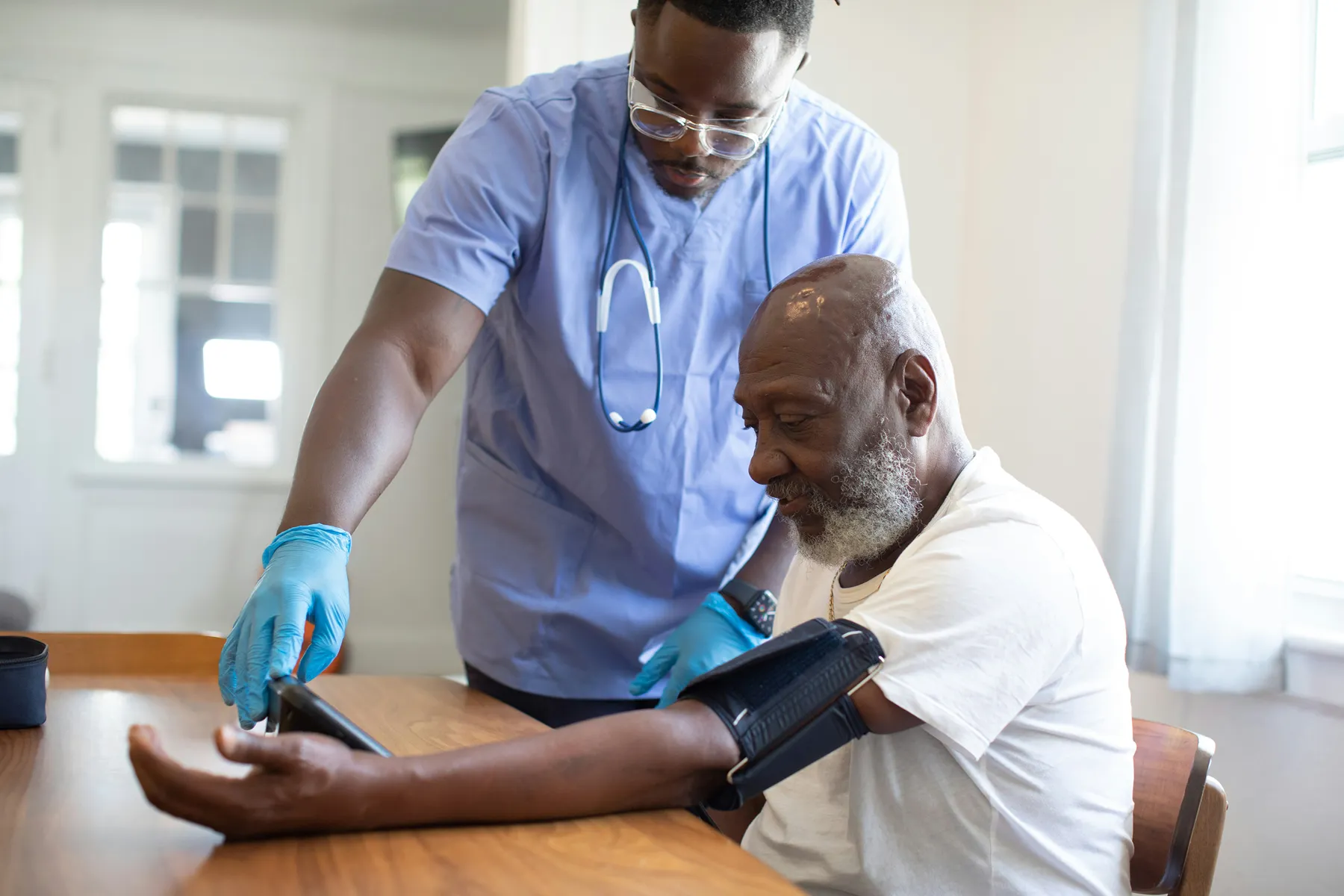
This is one of the most important routine check for adults over 60, and it remains underdiagnosed despite being simple and inexpensive to perform. Hypertension is largely asymptomatic but it may cause an insidious stroke or heart attack, and the cardiovascular risk it generates compounds over time. Treatment is effective, well tolerated, and meaningfully reduces the risk of such major problems.
The important nuance for older adults is that blood pressure targets have evolved. Very aggressive lowering is not necessarily better in people over 75, particularly in those who are frail or have significant other conditions. The goal is optimisation rather than chasing a number, and it should be guided by the overall clinical picture rather than a single reading. Blood pressure should be checked at least annually. A home blood pressure monitor is a worthwhile investment for tracking patterns outside the clinical setting, since readings taken at home are often more representative than those taken in a GP surgery.
Cholesterol and cardiovascular risk
A fasting lipid profile, covering total cholesterol, LDL, HDL, and triglycerides, combined with blood pressure, age, smoking status, and diabetes risk, gives your GP the information needed to calculate your ten-year cardiovascular risk. This is the basis for decisions about statin therapy, and it is considerably more useful than any individual result viewed in isolation.
For over-60s who have not had this calculation done recently, requesting it is straightforward via your GP. If your risk score is already known and you are on a statin, what is worth monitoring is whether the dose is appropriate and whether LDL has responded as expected.
Blood sugar and HbA1c
HbA1c measures average blood sugar over the preceding two to three months and is the primary test for diagnosing type 2 diabetes and identifying prediabetes. This matters more than a single fasting glucose measurement, which captures only a snapshot.
The clinical case for checking HbA1c regularly after 60 is strong. Type 2 diabetes prevalence rises steeply with age, and many people are unaware they have it. Undiagnosed diabetes at this age carries the cumulative risk of cardiovascular disease, kidney damage, eye disease, and neuropathy that compounds over years. Catching it early and ideally in the prediabetes stage that precedes it, creates a meaningful opportunity for intervention through diet, exercise, and if needed, medication.
HbA1c should be part of any comprehensive health review after 60, particularly in those with abdominal obesity, a family history of type 2 diabetes, or elevated blood pressure.
Bowel cancer screening
Bowel cancer screening in England is provided routinely through the NHS. Everyone aged 50 to 74 who is registered with a GP is sent a home stool test every two years. The test is called faecal immunochemical test, or FIT, which detects traces of blood in the stool that may indicate polyps or cancer.
Completion rates for the NHS screening programme remain lower than they should be, in part because the test feels uncomfortable to discuss, but bowel cancer is the fourth most common cancer in the UK and the second most common cause of cancer death, and it responds extremely well to treatment when caught early. If you are over 74 and no longer receive automatic invitations, a FIT test kit can still be requested. Eligibility for automatic invitation ending at 74 does not mean the test stops being relevant.
Abdominal aortic aneurysm screening
In England, men registered with a GP are automatically invited for a one-off abdominal aortic aneurysm, or AAA, screening ultrasound during the year they turn 65. Abdominal aorta is the main blood vessel running through the abdomen and an abdominal aortic aneurysm is a weakening and bulging of the aorta wall that can rupture with very little warning, which could be life-threatening. The screening programme is simple, takes less than ten minutes, and in men found to have a significant aneurysm, monitoring and timely surgery saves lives.
This is one of the cleaner examples of screening working as intended. It is a single test, there is a defined population, there is a clear action pathway, and there is a well-evidenced mortality benefit. If you are a man over 65 and have never been screened, you do not need to wait for an invitation. You can contact your local NHS AAA screening service and request an appointment. People assigned male at birth who are registered as female with their GP may also need to contact the service rather than receiving an automatic invitation. Women are not routinely offered AAA screening because their population risk is considerably lower. Anyone outside the screening programme who has particular risk factors or concerns should discuss these with their GP.
Bone health and fracture risk
Osteoporosis may not cause symptoms until it causes a fracture, and the fractures it causes, particularly hip fractures, carry serious consequences in later life. The mortality and morbidity associated with hip fracture in older adults is significantly underappreciated. Clinicians can assess fracture risk using tools such as FRAX, which considers factors including age, weight, previous fractures, smoking, steroid use and family history. A DEXA scan measures bone density but is not routinely offered to everyone, and is generally used when someone’s risk factors suggest that further assessment would be useful.
For a simple starting point, the Royal Osteoporosis Society’s Great British Bone Check is a free online tool that takes around three minutes and helps identify risk factors for osteoporosis and future fractures. It is not a diagnostic test, but the results can help identify whether it would be worth discussing bone health, fracture risk or a possible bone-density assessment with a GP. It can be accessed here.
A history of fragility fracture, long-term steroid treatment, low body weight or a parental history of hip fracture are among the reasons to consider a more detailed bone-health assessment.
Vitamin D also plays an important role in maintaining healthy bones and muscles, making it particularly relevant as we get older. The NHS recommends that adults consider taking a daily supplement containing 10 micrograms of vitamin D during autumn and winter, when sunlight in the UK is not strong enough for the body to make sufficient amounts. Some people at higher risk of vitamin D deficiency, including those with very limited exposure to sunlight, may be advised to take a supplement throughout the year.
Other cancer screening programmes
Breast cancer screening via mammography is offered to women aged 50 to 71 every three years in the NHS. Breast cancer outcomes are strongly stage-dependent, and earlier detection improves them meaningfully. If you are within this age range and have not attended your most recent invitation, it is worth contacting your GP. Women aged 71 and over are no longer invited automatically but can contact their local NHS breast screening service to request screening themselves.
Cervical screening is offered through the NHS every five years to women and people with a cervix aged 25 to 64. For someone approaching or in their early sixties, attending the final routine invitations remains important. After 65, routine invitations generally stop unless a recent screening result has been abnormal.
Lung cancer screening is in active development in England, with targeted programmes for high-risk groups, primarily current and former heavy smokers in a defined age range. Unlike breast, bowel and cervical screening, this is therefore not something every person in the age group will automatically receive. Anyone with a significant smoking history who has not been contacted about a lung health check is worth asking their GP whether they meet the criteria.
What is not worth obsessing over
Full body MRI scans, comprehensive blood panel packages, and tumour marker tests offered by private screening companies sit in considerably more ambiguous territory. For healthy people without specific symptoms or risk factors, many of these tests carry a meaningful risk of generating incidental findings that require further investigation, cause significant anxiety, and frequently turn out to be benign. This is a well-documented phenomenon called overdiagnosis, and it is a genuine cost of screening carried out beyond the evidence base.
This does not mean private health checks are without value. An annual health check that measures blood pressure, HbA1c, lipids, weight, and basic kidney and liver function, and provides time to discuss the results with a clinician, is genuinely useful.
Making your annual health check count
The most practical approach for most people over 60 is to treat an annual health check not as a one-off event but as a structured annual conversation with a clinician who can see results in the person’s own context. Individual numbers matter less than trends over time, and less than the combined picture. Blood pressure on its own tells you something but blood pressure combined with HbA1c, lipid profile, weight, grip strength, and family history tells you considerably more.
The goal is to understand your current trajectory clearly enough to influence it rather than just finding something wrong. For most people in their 60s and 70s, there is almost always something in their health picture that responds to intervention, and the intervention itself rarely has to be dramatic to make a difference.
Preventive health works best when it is targeted rather than exhaustive. The checks outlined here have the strongest evidence base for this age group, and any other test deserves a more sceptical look.