

When someone lives to 117 without any major health conditions, scientists take notice. Earlier this year, researchers studying a Spanish supercentenarian published findings that drew global attention. To try and understand the biological factors that led to her long and healthy life, they did a complete analysis of her genetics, immune system, metabolism, epigenetic ageing, and gut microbiome all at once. Headlines focused on her extraordinary genes, which showed little signs of age-related damage, but the real outlier was found in her gut.
It turns out her microbiome (the ecosystem of bacteria, fungi, and viruses living in the digestive system) looked more like that of someone decades younger. It was richer, more diverse, and full of bacterial species linked to healthy ageing.
This discovery adds to a growing understanding: the gut microbiome is about more than digestion and might be related to hundreds of biological processes, including how quickly we age.
The ageing microbiome: what happens over time
As we move through life from infancy, our gut ecosystem shifts in predictable ways. Research shows that gut microbial composition stabilises in adulthood but changes again in elderly populations. Older adults tend to have lower diversity within their microbiomes and have higher abundances of Bacteroidetes. However this isn’t the case for everyone- research shows that older people show greater variation in microbiome composition than is seen in younger populations. This means that scientists have been able to define what a ‘healthy ageing’ microbiome looks like; one with high diversity and short-chain fatty acids (SCFA) producing organisms and low potentially pathogenic organisms. They tend to have high Akkermansia and Christensenellaceae and low Bacteroidetes.
In all ages, it is better to have a high abundance of “good” bacteria that produce beneficial short-chain fatty acids (SCFAs) like butyrate. Losing “good” bacteria can cause low-grade, chronic inflammation that affects systems beyond the gut and can accelerate processes behind frailty, metabolic disease and cognitive decline. The effects of an unhealthy microbiome may also become more pronounced as you age, due to lower physiological reserve. This may be why research has shown associations in older people between gut health and physical fitness, frailty, sarcopenia and even survival.
The Spanish supercentenarian’s microbiome contained high levels of Christensenellaceae, Bifidobacterium and Akkermansia muciniphila, and high diversity of organisms. Similar findings appear in centenarian populations from Italy, China, and Korea. These bacteria are thought to support your gut barrier integrity and produce compounds that regulate immune function and lipid metabolism. This raises an exciting possibility - can our microbiome help us age healthily? And if so, what can we do to help optimise it?
Nature, nurture, or nutrition?
The gut microbiome sits at the intersection of genetic predisposition and lifestyle choices. There is some inheritability from family, but it is also shaped over decades by diet, physical activity, medications, infections, and social factors. This means that although genes play a role, in general the microbiome responds rapidly to lifestyle and dietary choices. Over the course of a lifetime the decisions you make will have a big impact on your microbiome, which is why your microbiome becomes more unique as you age.
One of the most powerful levers is diet. The Mediterranean diet, rich in vegetables, legumes, and olive oil is repeatedly linked to higher microbial diversity and greater production of anti-inflammatory metabolites. Fermented or cultured foods, such as yogurt, miso or sauerkraut have also been shown to be good for the gut. Dietary changes have been shown to be effective in older adults. In a 2020 study, older adults who adopted a Mediterranean diet for 12 months developed microbiome changes associated with slower frailty progression and better cognition. And in a twin study aimed at the over 60s, the twin that took fibre supplements for 12 weeks showed healthier microbiomes and performed better on cognition tests. The Spanish supercentenarian’s unusually high levels of the beneficial Bifidobacterium could be due to luck but is more likely due to her habit of eating yogurt three times a day for most of her life. She also, unsurprisingly, followed a Mediterranean diet.
It’s not just about diet though. Exercise, even gentle walking, fosters beneficial bacteria and improves gut–brain communication. Conversely, chronic stress, antibiotics, and low-fibre processed foods erode microbial richness.
Can we engineer a “longevity microbiome”?
Not yet. Most microbiome research is observational, meaning it finds correlations rather than proof of cause and effect. Although it takes about three months of consistent dietary and lifestyle changes before your microbiome permanently shifts, we do know that we can improve the quality of our microbiome in as little as days. So it’s never too late to try and optimise your gut for health. Simple actions that you can take today:
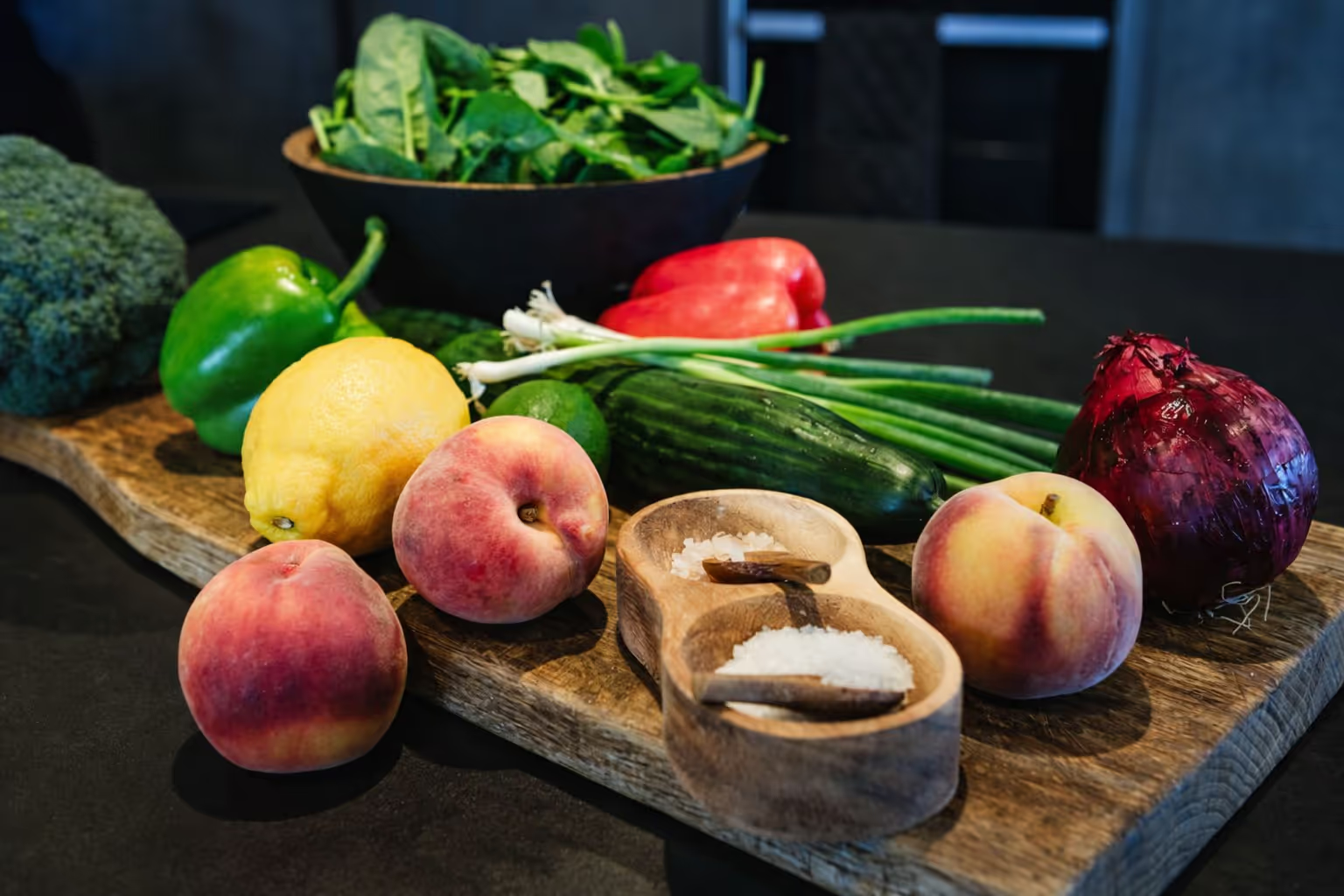
- Eat more plants and fibre. Aim for 30+ different plant foods a week to diversify bacterial species. That includes fruits and vegetables, legumes, nuts, seeds, herbs, and whole grains. Each food feeds a slightly different microbial species which is how it helps foster diversity.
- Include fermented foods. Yogurt, kefir, kimchi, and miso introduce beneficial microbes. Try and incorporate a wide range into your diet as different ferments contribute different species and metabolites.
- Avoid ultra-processed foods. These are usually low in fibre, high in fat, salt and sugars, and the additives they contain can disrupt the microbiome.
- Move daily. Physical activity enriches microbial diversity and reduces inflammation, with positive changes in microbiome observed in as little as 5 weeks in older adults.
- Avoid unnecessary antibiotics. These have been shown to reduce microbial resilience, and it can take a while for the microbiome to return to baseline after a course.
- Stay socially connected. Loneliness and stress alter gut composition through hormonal pathways.
- Monitor stress and sleep. Chronic stress, either emotional or physical, increases gut permeability and inflammatory bacteria via cortisol and sympathetic activation.
Probiotic or prebiotic supplements show modest benefits for some specific outcomes, but results vary by strain and person. The best-supported approach remains whole-food dietary diversity.
The bigger picture
The Spanish supercentenarian’s story highlights something important: ageing well is not only about genes, it’s also about maintaining a balanced inner ecosystem. This research highlights that it takes multiple systems, including metabolism, immunity, and the gut microbiome, to stay aligned and healthy as you age. But when this happens, it is possible to reach an impressively old age while remaining remarkably well.
It also reinforces the common behaviours that strengthen these systems. A healthy gut microbiome reflects a lifetime of diverse diet, moderate exercise, social connection, and minimal medical overuse. These same behaviours underpin cardiovascular, metabolic and cognitive health. So building a foundation of good habits is the key to staying resilient across all your systems.